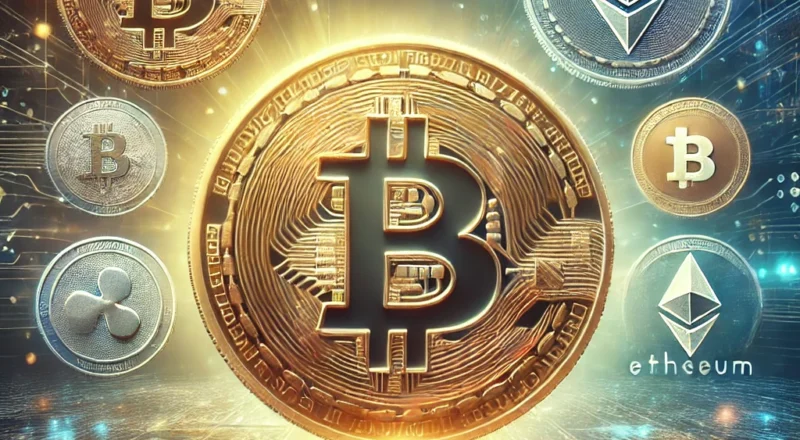
In the world of cryptocurrency, Bitcoin stands as the first and most well-known digital currency. However, as the industry has expanded, thousands of alternative cryptocurrencies, known as “altcoins,” have emerged. Each of these digital assets has distinct features and serves different purposes, leading to varied investment opportunities. Understanding the differences between Bitcoin and altcoins can help you make more informed choices.
1. Origins and Purpose
Bitcoin, introduced in 2009 by an anonymous entity known as Satoshi Nakamoto, was designed as a decentralized digital currency and a store of value. Its core purpose is to provide a digital alternative to traditional currencies while remaining outside the control of any government or central bank. With a fixed supply of 21 million coins, Bitcoin is often referred to as “digital gold” due to its deflationary nature and store-of-value properties.
Altcoins, on the other hand, were created to improve upon Bitcoin’s limitations or to serve entirely different functions. Ethereum, for example, introduced the concept of smart contracts, enabling decentralized applications (dApps) to run on its blockchain. Ripple (XRP) focuses on facilitating cross-border payments for financial institutions, and stablecoins like Tether (USDT) aim to minimize volatility by pegging their value to fiat currencies.
2. Technology and Consensus Mechanisms
Bitcoin’s blockchain operates on a Proof of Work (PoW) consensus mechanism, which requires miners to solve complex mathematical problems to validate transactions and add new blocks to the chain. While this method ensures security and decentralization, it also consumes substantial energy, raising environmental concerns.
Many altcoins have adopted alternative consensus mechanisms to enhance efficiency, speed, and scalability. Ethereum, for instance, transitioned from PoW to Proof of Stake (PoS), which requires validators to lock up their coins in a process known as staking. This shift has reduced energy consumption and improved scalability. Other altcoins, such as Cardano and Algorand, utilize variations of PoS to balance security, decentralization, and environmental sustainability.
3. Market Capitalization and Liquidity
Bitcoin has maintained its position as the most valuable cryptocurrency by market capitalization, accounting for around 40-50% of the total cryptocurrency market. Due to its high demand and widespread recognition, Bitcoin generally has higher liquidity than most altcoins, making it easier to buy and sell.
Altcoins range significantly in market cap and liquidity. Leading altcoins like Ethereum and Binance Coin (BNB) are highly liquid and widely accepted across exchanges. However, smaller or newly launched altcoins may have limited trading volumes and can be harder to liquidate quickly. This diversity means that investors can choose between high-cap stable options or explore smaller, potentially high-growth coins, though with increased risk.
4. Volatility and Investment Risk
Cryptocurrencies are known for their price volatility, with Bitcoin’s price frequently experiencing sharp movements. However, Bitcoin’s relatively established status and market presence mean it tends to be less volatile than most altcoins.
Altcoins, particularly those with smaller market capitalizations, can be extremely volatile. While this volatility presents opportunities for substantial returns, it also comes with heightened risks. For example, meme coins like Dogecoin and Shiba Inu have seen massive spikes driven by social media interest but have equally faced drastic price drops. Investors considering altcoins must be prepared for significant price swings and should approach these investments with caution.
5. Investment Opportunities
- Bitcoin as a Long-Term Investment: Bitcoin’s first-mover advantage and position as a store of value make it appealing for long-term investors. Its limited supply and increasing institutional interest contribute to its reputation as a reliable asset, often compared to gold. For those looking for a relatively stable, long-term crypto investment, Bitcoin remains the primary choice.
- Altcoins for Growth Potential: Altcoins offer diverse investment opportunities based on the unique functionalities they provide. For example, Ethereum has become a backbone for decentralized finance (DeFi) and non-fungible tokens (NFTs), making it attractive to investors interested in these growing sectors. Other altcoins like Solana, Polkadot, and Chainlink offer promising technologies with potential for high growth, though these often come with higher risk compared to Bitcoin.
- Stablecoins for Reduced Volatility: Stablecoins provide a low-risk alternative to Bitcoin and other volatile altcoins by maintaining a stable value. Investors often use stablecoins as a tool for earning interest or managing crypto holdings without exposure to market swings.
6. Diversifying Your Portfolio
A balanced cryptocurrency portfolio might include a mix of Bitcoin for stability and altcoins for growth potential. Diversifying your investments can help spread risk and allow for exposure to different sectors within the blockchain ecosystem, such as DeFi, gaming, or cross-border payment solutions. However, thorough research and an understanding of each coin’s unique risks are essential.
Conclusion
Bitcoin and altcoins each offer unique investment opportunities in the cryptocurrency market. Bitcoin’s stability, reputation, and limited supply appeal to those seeking a store of value and long-term growth. In contrast, altcoins provide diverse applications and the chance for high returns but with greater risks. By understanding these differences, investors can align their strategies with their risk tolerance and investment goals, creating a portfolio that captures both the security of Bitcoin and the innovation of the altcoin space.